Who Ordered 600 Orange EV Yard Trucks—and Does the Claim Add Up?
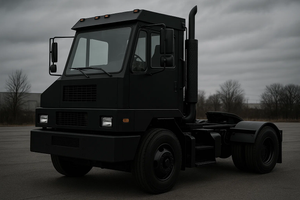
Orange EV says an unnamed customer ordered 600 electric terminal trucks, with deployment underway and completion expected during 2026. If delivered as described, it would be the largest known electric yard-truck order by a wide margin. But the announcement leaves unanswered who needs 600 shunt trucks, where they will operate, how firm the order is and whether one company will actually operate them.
The number is large enough to deserve attention—and large enough to deserve scrutiny.
Orange EV announced the order on June 2, 2026 as part of what it described as record order volume. The company also reported a 272% increase in leasing activity over the previous 12 months and projected that it could capture more than 25% of new terminal-truck orders and deliveries by year-end.
The customer was not identified. No deployment locations, contract value, model mix, charging plan or quarterly delivery schedule were disclosed. Truck News reported the announcement and its stated delivery target.
That does not mean the order is false. It means the public information is insufficient to interpret the headline literally.
Why 600 terminal tractors is an extraordinary number
Terminal tractors—also called yard trucks, yard spotters, hostlers, yard goats or shunt trucks—usually operate in small groups at warehouses, factories, rail yards and distribution centres.
A busy site may operate several units. Large distribution and intermodal facilities may operate dozens. A requirement for 600 trucks would therefore almost certainly span a large network rather than one terminal.
The scale becomes clearer beside Orange EV’s own production history. Later in June 2026, the company announced deployment of its 2,000th electric terminal truck. A 600-unit order equals approximately 30% of the company’s first 2,000 cumulative deployments.
It is also more than six times the size of APM Terminals Elizabeth’s publicly identified order for 96 Orange EV HUSK-e XP terminal tractors. That project named the buyer, location and equipment. APM Terminals described its 96-truck order publicly.
When the smaller order provides those details but the 600-unit order provides none, asking questions is reasonable.
Could Amazon be the mystery customer?
Amazon is an obvious possibility, but there is no public evidence naming Amazon as the buyer.
Its network is large enough that 600 yard trucks distributed across dozens or hundreds of locations is operationally plausible. Amazon also has a history of unusually large electric-vehicle commitments, including its agreement for 100,000 Rivian delivery vans.
Reasons the theory fits include:
● A network large enough to absorb 600 terminal tractors
● Predictable return-to-base yard operations suited to charging
● Public emissions-reduction commitments
● The ability to standardize equipment across many facilities
● Enough capital to fund vehicles and charging infrastructure
But the theory also has holes:
● No Amazon facility, executive or procurement announcement has been connected to the order.
● Amazon frequently uses third-party yard and transportation providers, so it may not purchase the tractors directly.
● Charging 600 trucks across many sites would require a substantial parallel infrastructure program.
● A customer of Amazon’s profile would offer Orange EV enormous publicity unless disclosure were contractually prohibited.
Amazon-scale deployment is believable. Amazon as the buyer remains speculation.
A national yard-management company may be more likely
The strongest structural candidate may not be a retailer.
Companies such as Lazer Logistics, YMX Logistics, NSSL and other outsourced yard-management providers operate trucks across many customer locations. One provider can control a large fleet without any single end customer using hundreds of shunt trucks.
Lazer is notable because it operates thousands of fleet assets and publicly describes an established relationship with Orange EV. Its business model could place a centrally procured group of trucks across numerous client yards.
Under that structure, “one customer ordered 600 trucks” could mean one fleet-management company contracted for equipment that will ultimately serve many retailers, manufacturers and distribution customers.
That interpretation fits the industry’s operating model—but raises more questions:
● Are all 600 firm purchases or a multi-year master agreement?
● Are the units replacing tractors already operated by the provider?
● Are they assigned to signed customer contracts or dependent on future awards?
● Does the number include leases, rentals or purchase options?
● Will all units be owned by the ordering entity?
Until the customer or contract structure is disclosed, “single order” tells us less than it appears to.
Could it be a leasing company?
A lessor or fleet-finance intermediary is another credible possibility.
Orange EV highlighted a 272% increase in leasing activity in the same announcement. That may be unrelated, but placing the figures together invites the question.
A leasing company could order a large block and place trucks with multiple customers over time. This would explain why no obvious operating company appears to need 600 units.
It would also change the meaning of the headline. A manufacturer order from a lessor is real demand, but it is not the same as 600 trucks already assigned to operating sites.
The unanswered questions are straightforward:
● How many units have end-user assignments?
● Is the contract take-or-pay?
● Are deliveries conditional on customer placement or incentive approval?
● Does “deployment underway” mean operating, being built or merely scheduled?
Walmart, DHL or another national operator?
Walmart, DHL Supply Chain, major food and beverage distributors, parcel networks and national third-party logistics providers also have networks large enough to support multi-site deployment.
Several large logistics operators already use or publicly support electric terminal tractors. Orange EV displays DHL Supply Chain, Lazer Logistics, ABF Freight, YMX Logistics and NSSL among its customer relationships and testimonials. Orange EV lists several established fleet relationships.
That establishes plausible buyer types—not the identity of the buyer.
The delivery timeline deserves scrutiny
Orange EV said full delivery was expected during 2026.
Delivering 600 trucks within the year would be a major production and deployment increase relative to the company’s historical total. It may be achievable if capacity expanded well before the announcement and some units were already built or delivered.
However, the announcement did not disclose:
● Units delivered when the order was announced
● Monthly production capacity
● Existing backlog
● e-TRIEVER versus HUSK-e model mix
● Number of receiving sites
● Charger readiness
● Whether “delivery” means physical customer acceptance
The useful confirmation will be evidence of deliveries: identified operating sites, serial-number milestones, charging installations, customer acceptance or a progress report showing how many of the 600 entered service.
“Order” may not mean 600 immediate purchases
Commercial announcements can use the word broadly. It may describe:
● A firm purchase order
● A master agreement with scheduled releases
● A multi-year supply commitment
● A leasing-fleet allocation
● An agreement containing deployment or cancellation conditions
● A minimum commitment plus options
Orange EV may hold a firm 600-unit contract; nothing public disproves that. But without contract value, timing or customer confirmation, outsiders cannot distinguish among these structures.
That distinction matters when the headline is presented as proof that electric terminal tractors have moved from pilots to mass adoption. A large framework agreement is significant, but it is not necessarily proof of 600 near-term operating replacements.
What can be concluded responsibly?
Three conclusions are supported:
1. Orange EV publicly reported a 600-unit order and called it the largest in company history.
2. The customer and contract structure remain undisclosed.
3. A deployment this large would almost certainly be spread across many sites or end customers.
The most plausible buyer categories are a national yard-management provider, leasing company, major retailer or third-party logistics network. Amazon is large enough and committed enough to electrification to be possible, but there is no evidence identifying it as the customer.
Why the order still matters
If a substantial portion enters service, it will create demand for:
● Yard-specific charging infrastructure
● High-voltage technician training
● Mobile service coverage
● Battery and charger diagnostics
● EV-compatible common cab and chassis parts
● Used-electric-terminal-tractor valuation
● Battery-health reporting at resale
● Diesel-versus-electric operating-cost analysis
It would also pressure Kalmar Ottawa, Capacity, TICO, Autocar and other manufacturers to demonstrate more than prototype availability.
The market should measure adoption through delivered and operating trucks—not order headlines alone.
Frequently asked questions
Who ordered 600 Orange EV terminal trucks?
Orange EV has not identified the customer. No reliable public evidence currently confirms Amazon or any other specific company.
Could Amazon use 600 yard trucks?
Yes, if distributed across its logistics network. Operational plausibility is not confirmation that Amazon placed the order.
Would one facility use 600 terminal tractors?
That would be highly unusual. The order would almost certainly involve numerous facilities, clients or deployment phases.
Has Orange EV delivered all 600 trucks?
Orange EV said deployment was underway and completion was expected during 2026. Public reporting reviewed for this article did not provide a delivered-unit count.
How large is the order relative to Orange EV’s history?
Orange EV announced its 2,000th cumulative deployment later in June 2026. The order equals roughly 30% of that historical total.
Does this prove electric yard trucks are replacing diesel?
It indicates that at least one contracting party is considering a much larger deployment. Confirmed deliveries, operating results and repeat orders would provide stronger evidence.
Editorial disclosure
TerminalTractor.ca is an independent terminal-tractor parts and information business. It is not affiliated with Orange EV, Amazon, Lazer Logistics or the other organizations discussed. Confirmed facts and informed speculation have been intentionally separated. This article should be updated if the customer, contract structure or delivery progress becomes public.